


The Dark Side of the Internet
You may have heard the term Dark Web many times—a mysterious place hidden from ordinary users, often linked to unknown or even illegal activities. But what exactly is the Dark Web? How does it work? And is it dangerous to enter? In this article, we will explore this hidden part of the internet in simple yet precise language.
What Is the Dark Web?
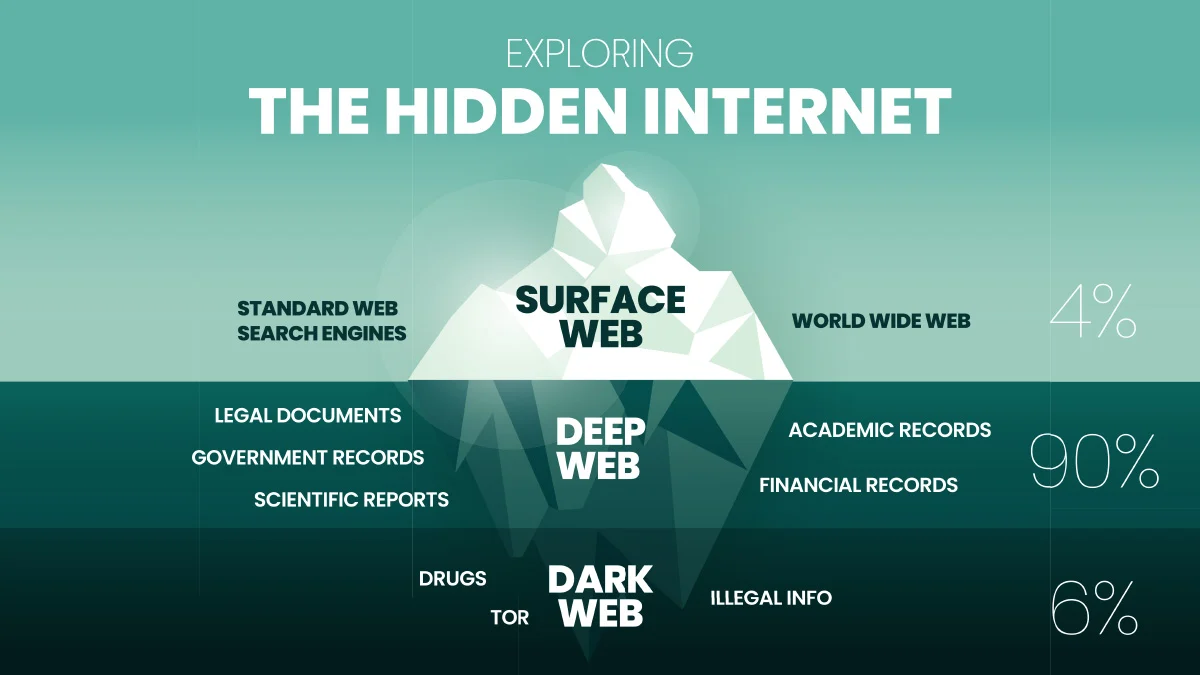
The Dark Web is a part of the internet that is not indexed by public search engines like Google or Bing. To access it, you need special software such as the Tor browser. Unlike the “Clear Web” that we all use daily, the Dark Web operates in an encrypted and anonymous environment.
Difference Between the Dark Web and the Deep Web
Many people confuse the Dark Web with the Deep Web. However, they are not the same. The Deep Web includes internet pages that require login credentials (such as bank accounts or emails). On the other hand, the Dark Web is mainly designed for anonymity and often associated with hidden or even illegal activities.
|
Criterion |
Deep Web |
Dark Web |
|---|---|---|
|
Accessible with normal browser |
Yes |
No |
|
Searchable on Google |
No |
No |
|
Requires special software |
No |
Yes (e.g., Tor) |
|
Usage |
Legal and common |
Mostly anonymous, sometimes illegal |
How Does the Dark Web Work?
Accessing the Dark Web usually requires the Tor Browser. Tor uses a technology called Onion Routing, which anonymizes your connection by passing it through multiple layers of encryption. Websites on the Dark Web do not use standard domains; instead, they rely on extensions like .onion.
What Content Exists on the Dark Web?
The content on the Dark Web is highly diverse. Examples include:
Anonymous political and social discussion forums
Websites selling illegal goods
Cryptocurrency marketplaces
Leaked government documents or confidential data
Hacking services and stolen information
It is important to note that not all content on the Dark Web is illegal. Some users rely on it to bypass censorship and protect their privacy.
Dangers of the Dark Web
Despite its mysterious appeal, entering the Dark Web comes with serious risks:
Fraud and Data Theft: Many websites aim to steal your personal data or cryptocurrencies.
Viruses and Malware: Files and links may contain harmful malware.
Surveillance by Authorities: Contrary to popular belief, your activities might still be monitored.
Access to Illegal Content: Even accidental exposure to illegal material can have legal consequences.
How to Access the Dark Web (With Caution)
⚠️ Warning: Accessing the Dark Web can be dangerous and is illegal in some countries. Proceed only for research or educational purposes, and always with caution.
Install the Tor Browser from the official torproject.org.
Use a VPN for extra security.
Stick to trusted sources when finding .onion links.
Never share personal information.
Legal Uses of the Dark Web
Although often linked to crime, the Dark Web is not only for criminals. Journalists, human rights activists, and citizens in censored countries use it to communicate securely and share information safely.
Conclusion: Should You Enter the Dark Web?
The Dark Web is a fascinating yet risky part of the internet. Learning about it can improve your digital security awareness, but careless exploration can lead to serious consequences. If you decide to access it, do so with full knowledge, caution, and responsibility.
Frequently Asked Questions About the Dark Web
1. Is using the Dark Web legal?
It depends on your country’s laws. Accessing the Dark Web may be legal, but engaging in illegal activities is a crime everywhere.
2. Is everything on the Dark Web dangerous?
No, but without proper knowledge, you may easily encounter harmful content or scammers.
3. Is browsing the Dark Web completely anonymous?
Tor tries to keep your connection anonymous, but no system is 100% secure.